• 1976
  • 1977
  • 1987
  • 1991
  • 1994
  • 1996
  • 1998
  • 2000
  • 2004
  • 2013
  • 2014
  • 2015
  • 2016
  • 2018
  • 2019
1976

The Beginning of Our Story

On October 4, 2025, Chelyabinsk State University celebrated its 49th anniversary. Over the decades, it has grown into one of the leading educational and research centers of the Southern Urals, an integral part of the region and, just as importantly, a home to everyone whose life is linked with it. This is a place where scientific projects and educational initiatives are born, discoveries are made, and the knowledge of generations is preserved. The university is a meeting point with mentors, friends, and one’s own future—the foundation of which is laid right here. Chelyabinsk State University is recognized as the very first university in the Southern Urals.

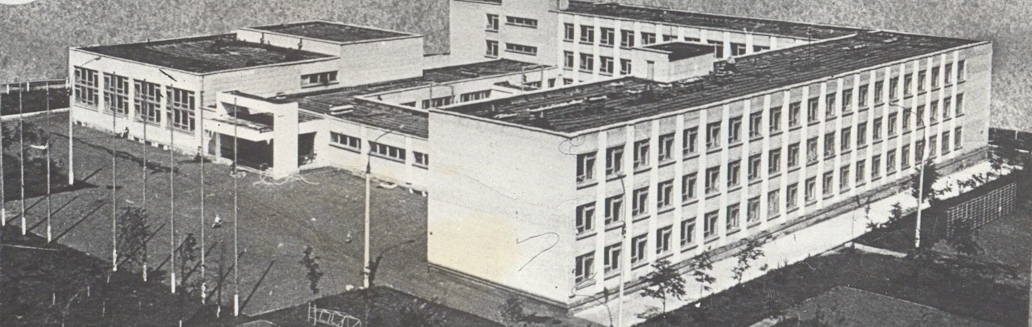
In 1974, the Council of Ministers of the USSR adopted a resolution establishing the university. The university officially opened two years later, in October 1976. 

Professor S. E. Matushkin, a corresponding member of the USSR Academy of Pedagogical Sciences, became the university’s first rector. The new university offered programs through two faculties: the Faculty of Physics and Mathematics and the Faculty of History and Philology. Thanks to the efforts of the university leadership, within three years the university was equipped with more advanced computing facilities than any other educational institution in the region. The university formed a team of young, innovation-driven faculty and experienced researchers focused on promising fundamental research. S.E. Matushkin established and headed a dissertation council in pedagogical sciences, which became one of the strongest in the Ural–Siberian region.

Over time, Chelyabinsk State University grew into a major center of science and education: the number of faculties expanded, and dozens of departments were established, employing holders of doctoral and candidate degrees. Postgraduate programs were launched in four areas.
1977

The Archaeological School

One of the university’s major achievements was the creation of a regional archaeological school in the Chelyabinsk area. It all began in 1977, when the first field season was held under the  leadership of G.B. Zdanovich. In 1987, one of the teams from the university’s archaeological expedition discovered Arkaim— a Middle Bronze Age fortified settlement dating to the 3rd–2nd millennia BC. 

In July 2015, Chelyabinsk State University archaeologists once again achieved notable success: in the Sosnovsky District of the Chelyabinsk Region, they discovered another Bronze Age settlement, which became a major event in archaeology.

1987

Rector V.D. Batukhtin

In 1987, Professor V. D. Batukhtin, a USSR State Prize laureate and Doctor of Physical and Mathematical Sciences, was appointed rector. The following years marked a period of rapid growth: the university expanded its structure, strengthened its community of doctoral scholars, broadened its spectrum of research areas and academic schools, and established solid partnerships with regional authorities, industrial enterprises, and both Russian and international universities. Thanks to the rector’s personal efforts, the university not only survived the difficult Perestroika years but also achieved international recognition.

1991

The Journal of Chelyabinsk State University

The year 1991 became a milestone in the university’s history. The academic journal The Journal of Chelyabinsk State University was launched. With the support of regional industrial enterprises and a number of leading scientists, the Faculty of Chemistry was established. 

That same year saw the beginning of the Law Faculty—later to become the Institute of Law—which for many years would be the primary source of professionally trained legal specialists in the Southern Urals. Its scholars implement an extensive research program across various fields of legal science and contribute to the development of Russian legislation.

1994

Growing Stronger

By the mid-1990s, the social sciences and humanities at Chelyabinsk State University strengthened significantly. The Faculty of Linguistics and Translation was established, becoming the first in the Chelyabinsk Region to train highly qualified translators and specialists in intercultural communication. The shifting political and economic landscape made it necessary to create a Faculty of Management to prepare professionals for state and municipal authorities, as well as for enterprises and organizations. 

At the same time, a Faculty of Psychology was established; today it has evolved into the Faculty of Psychology and Pedagogy and addresses current issues in these fields. 

In 1994, Chelyabinsk State University joined the international TEMPUS program, and in 2001 began issuing diplomas with a unified European Diploma Supplement.

1996

Strategic Partnership

Chelyabinsk State University established strategic partnerships in workforce training with the JSC Makeyev Design Bureau and the All-Russian Scientific Research Institute of Technical Physics (VNIITF) in Snezhinsk. 

The university has closely collaborated with the JSC Makeyev Design Bureau since its earliest days. V.P. Makeev personally provided organizational assistance and ensured material and technical support. In 1981, the first CSU graduates began working at the rocket center. This enterprise was one of the key initiators behind the opening of the university’s branch in Miass in 1996. Today, the branch has a Department of Applied Mechanics based directly at the enterprise. 

At the All-Russian Scientific Research Institute of Technical Physics (VNIITF) in Snezhinsk, students of the Faculty of Physics complete internships and take part in research projects that form the basis of their theses. This training model has been in place for more than 20 years, proving its effectiveness year after year.

Another major partnership emerged in the mid-1990s: the Inter-University Center for Medical Physics was opened, bringing together nearly all laser-medicine expertise in Chelyabinsk. It was built on several platforms—the medical physics laboratory at CSU, a laboratory at the South Ural State Medical University, and Chelyabinsk City Clinical Hospital No. 1. Later, the project expanded to include the Regional Children’s Hospital, the Regional Hospital, City Clinical Hospital No. 5, and several private centers. The center’s work resulted in patented and widely implemented laser medical technologies. 

Ties with medical institutions are further strengthened by the Faculty of Biology, whose achievements are closely connected with major regional organizations such as the Ural Research and Clinical Center for Radiation Medicine, the South Ural State Medical University, City Clinical Hospital No. 6, the Chelyabinsk Regional Blood Transfusion Station, and others. The faculty’s promising research has earned high recognition within the global scientific community.

1998

Faculty of Eastern Studies

In 1998, the university established the Faculty of Eastern Studies. Its main mission was to supply the border region with qualified specialists and academic programs for effective cooperation with countries of the East.

2000

New Faculties and a New Branch

In 2000, the Faculty of Ecology became an independent unit, entrusted with tackling the most urgent problems of human–environment interaction. In 2002, the Faculty of Journalism likewise gained independent status. 

A new CSU branch opened in Troitsk in 1999, followed in 2000 by another branch in Kostanay, Republic of Kazakhstan.

2004

Rector A.Yu. Shatin

In 2004, Professor A.Yu. Shatin, Doctor of Economics, was elected rector of the university. IT technologies began rapidly advancing: the Institute of Information Technologies was established, and within it—ILab, the region’s first project-based learning laboratory equipped to the latest European standards. Students were given the opportunity to develop projects in robotics and mobile applications.

The Institute of Sectoral Economics, Business and Administration has become one of the largest academic units of Chelyabinsk State University, bringing interest in economic science to a new level and actively promoting it both within the region and far beyond, including the Kurgan and Orenburg regions and Siberia.

2013

The Chelyabinsk Meteorite

In 2013, CSU physicists made a significant contribution to astronomical science: they were the first to study the meteorite that fell into Lake Chebarkul, and their findings became foundational in the scientific examination of the celestial body later named “Chelyabinsk.” A year later, the university became the only institution in the Southern Urals to receive a 90-million-ruble megagrant in the field of mathematics. The grant supports an international-level mathematical laboratory specializing in research in quantum topology.

2014

Rector D.A. Tsiring

In 2014, D.A. Tsiring, Doctor of Psychology and Professor, was elected Rector of the university.

2015

Abilimpics

In 2015, the University Educational District resumed its operations, once again bringing together numerous schools around the university. That same year, the university received its first major grant from the Russian Ministry of Education and Science to support the development of student self-governance. In addition, the first Abilimpics professional skills championship for people with disabilities was launched in the Chelyabinsk Region.

2016

Opening of the College

In 2016, Chelyabinsk State University opened a college offering secondary vocational education programs. The new unit was established based on the Chelyabinsk branch of the Moscow State Humanities and Economics University, which had been dissolved in 2015. 

That same year, marking CSU’s 40th anniversary, the university’s scholars published the book Chelyabinsk Superbolide. The Ski Track of Russia sporting event returned to the campus, the regional forum Student Self-Governance 2.0 was held, and a Professors’ Alley was established in the university’s botanical garden.

2018

A New Faculty

In 2018, the university’s medical direction made a significant and long-awaited breakthrough. For several decades, researchers from the Faculties of Physics, Chemistry, and Biology had been laying the groundwork, and finally the Faculty of Fundamental Medicine and the Institute of Nuclear Medicine were opened.

2019

Present Day

In July 2019, S.V. Taskaev, Doctor of Physical and Mathematical Sciences and Associate Professor, was appointed Acting Rector of CSU, and in September he was officially appointed Rector. 

Today, Chelyabinsk State University is a multidisciplinary institution that provides high-quality education. CSU is a member of the Association of Classical Universities of Russia, the Eurasian Association of Universities, and the International Association of Universities under UNESCO. The university has also become a federal innovation platform for inclusive higher education. 

The cornerstone of CSU’s scientific activity has always been — and continues to be — a strong focus on advancing fundamental research in the physical and mathematical sciences, the natural sciences, and the social sciences and humanities. Equally important is the university’s integration of fundamental and applied research, as well as the sustained support of academic schools. This is demonstrated by the successful development of more than thirty research areas currently active at CSU. 

The university’s research and innovation efforts are strengthened through collaboration with leading scientific centers, foundations, and organizations in Russia and abroad. In 2014–2015, the volume of research funding increased significantly — nearly doubling — and CSU scholars received prestigious grants that underscored the high level of their scientific work. Increasingly, major academic and applied research conferences are held at CSU or with its direct participation. 

CSU’s successful 20-year experience in developing an inclusive education system deserves special mention. The university has become the primary institution in the Ural Federal District providing learning conditions for students with disabilities and special educational needs. Each year, more than one hundred such students are enrolled here, representing approximately 80% of all students with disabilities in the Chelyabinsk Region who require special educational conditions. In addition, the Regional Educational and Research Center for Inclusive Education has created a pre-university adaptation system using specialized equipment and adaptive information and communication technologies. The barrier-free architectural environment on campus allows students to move freely throughout the academic buildings and surrounding grounds. Our experience has been recognized both within the wider educational community and at the administrative level. In 2014, CSU hosted an International Scientific and Practical Conference on Inclusive Education, attended by representatives of the Russian Ministry of Education and Science and Rosobrnadzor. Rector D.A. Tsiring became a member of the Governor’s Council for People with Disabilities in the Chelyabinsk Region. In 2017, by decision of the Ministry of Education and Science of Russia, a Resource Training and Methodological Center for the Education of People with Disabilities and Special Needs was established at CSU, serving the Chelyabinsk, Sverdlovsk, and Kurgan Regions. 

Since its founding, Chelyabinsk State University has pursued a distinctive mission in higher education, educating highly qualified professionals for the region’s universities and research centers. One of the university’s earliest and central mottos was Primum mobile in saecula saeculorum. This is precisely what guides our community today: to move forward for the benefit of society, nurturing new generations worthy of carrying this mission onward.