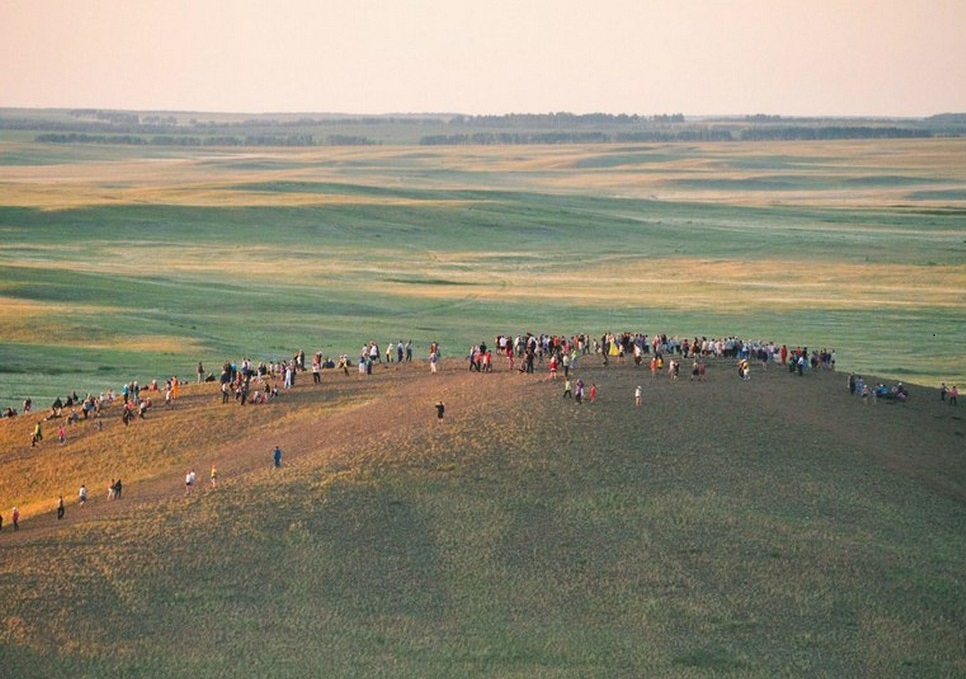
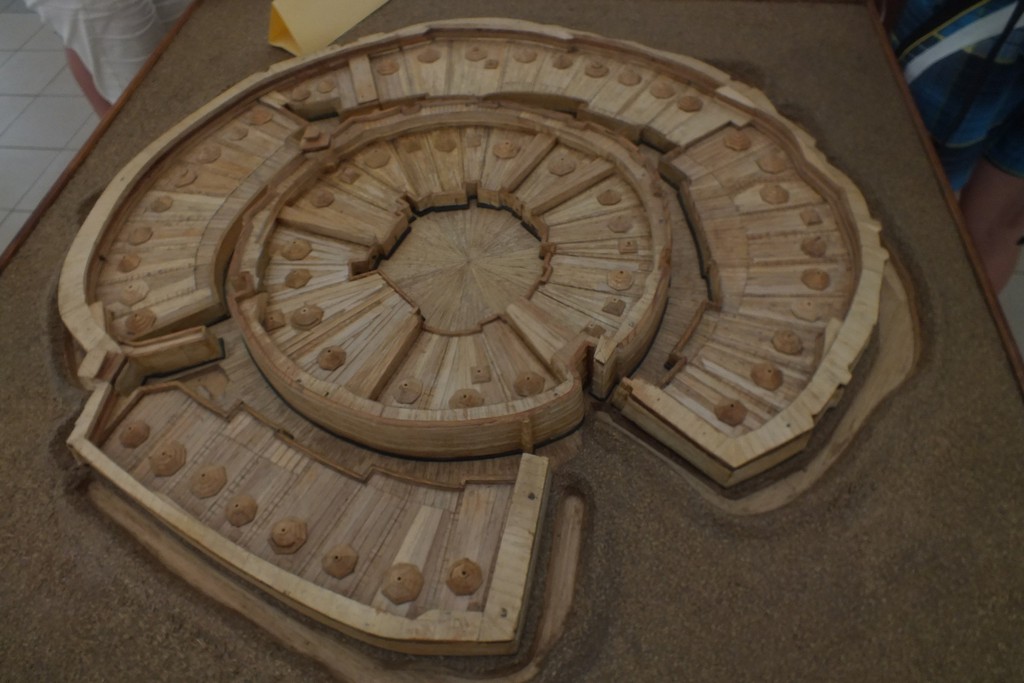
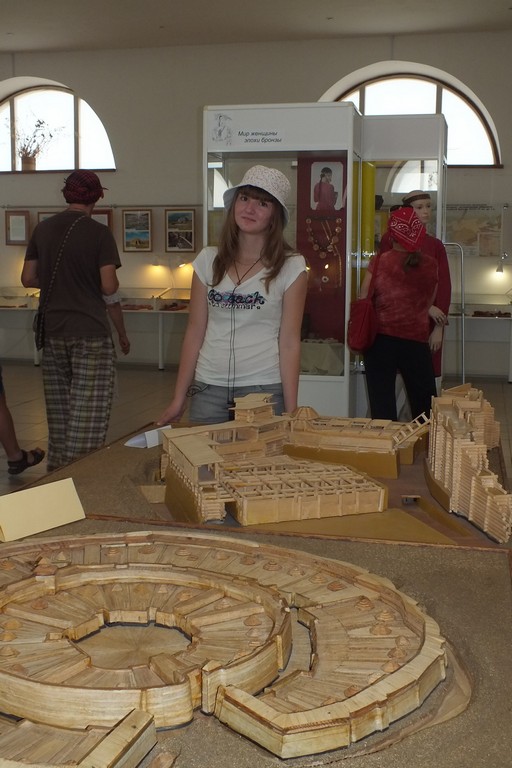
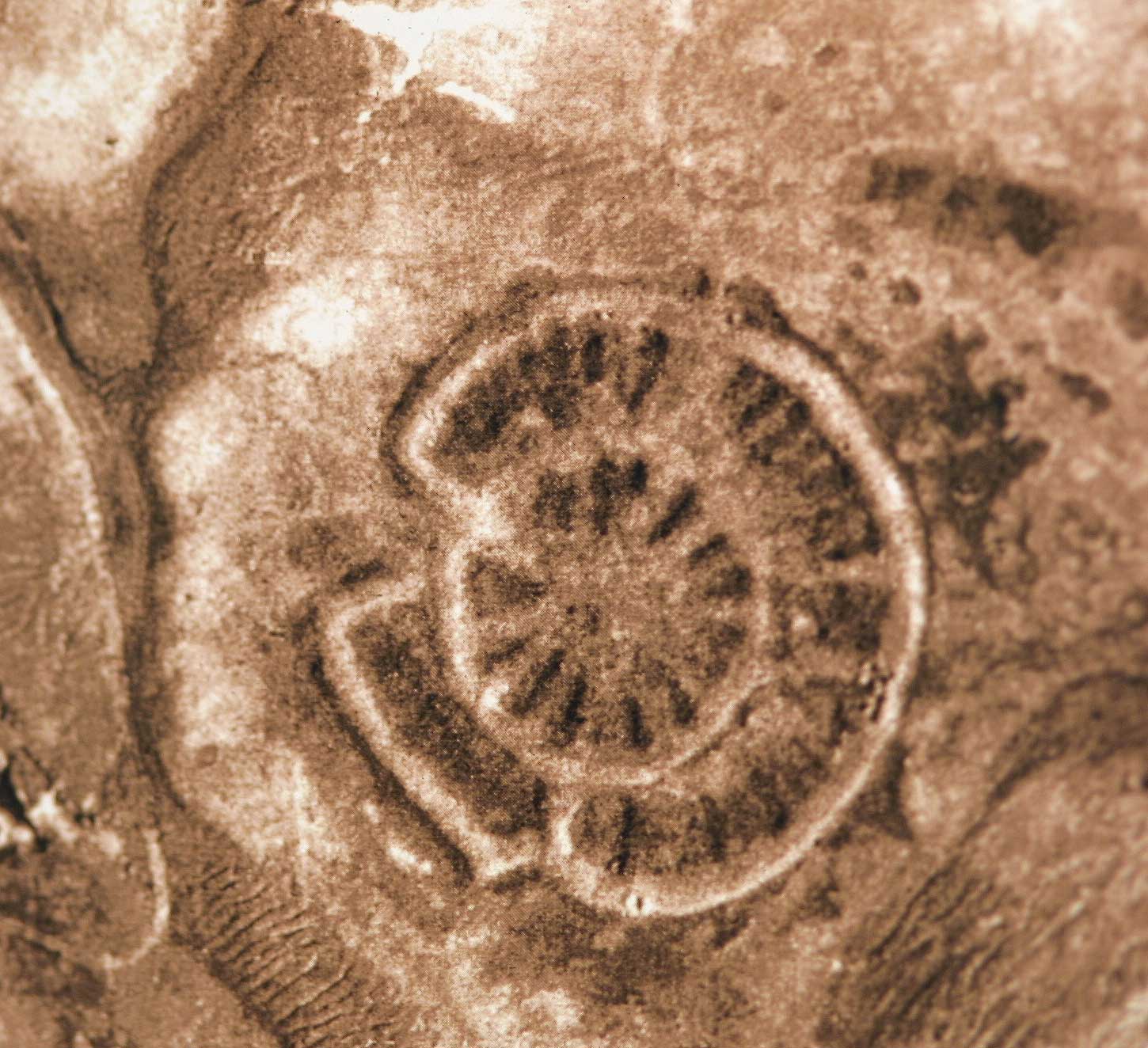
Arkaim is an archaeological site of the Bronze Age, a fortified settlement. It is located in the Bredinsky district of the Chelyabinsk Oblast, on the left bank of the river Bolshaya Karaganka (a tributary of the Ural River), near the modern settlement of Alexandrovsky. Separating Arkaim from many other ancient settlements, its architecture is distinguished by clear planning. The settlement consists of two concentric circles of dwellings, each surrounded by a defensive wall and a moat. The total area of the site is 20,000 sq. m. The diameter of the inner wall is 85 m, and that of the outer wall is about 145 m. At 50–60 m away from the outer wall, the remains of a third rampart are visible. The central part of the settlement is not built up and looks like an open 27 × 25 m square.
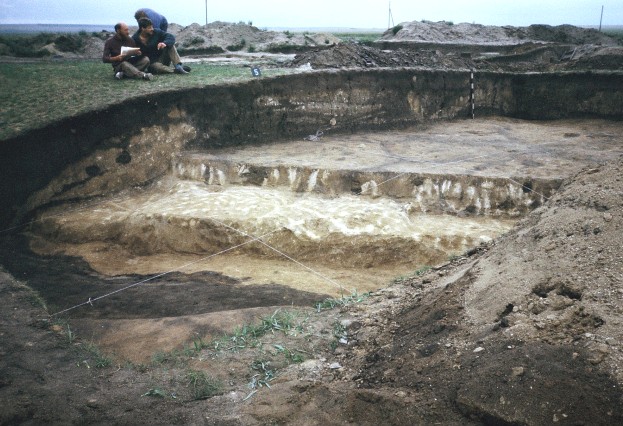
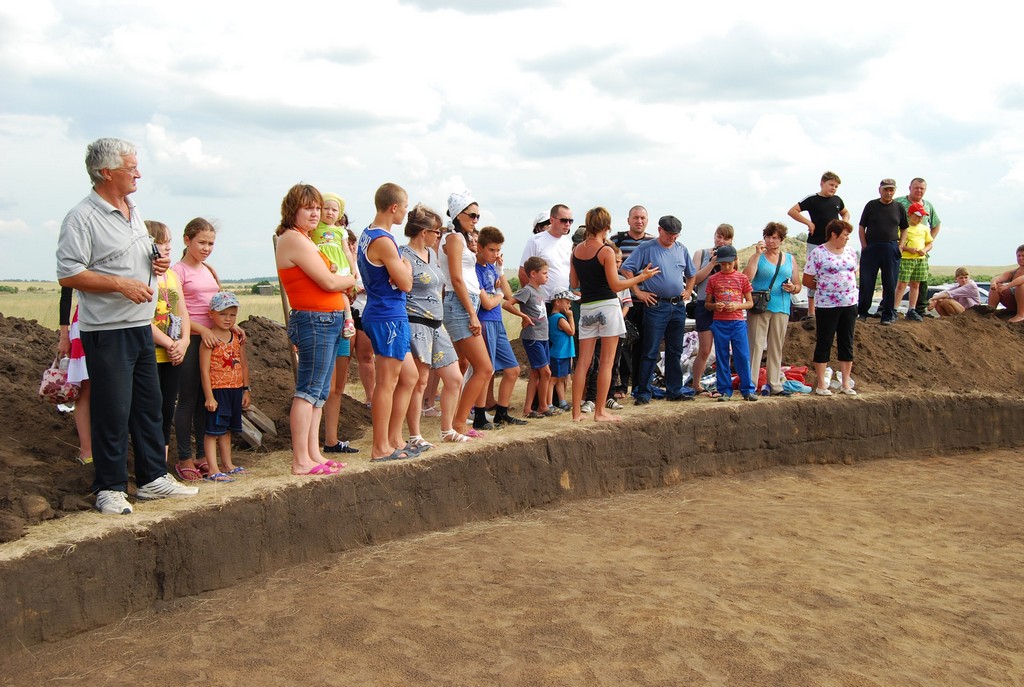
The thickness of the circular walls is 3–5 m at the base. The fortifications also include radial walls, which divided the outer ring of dwellings into sectors. Four entrances with elements of labyrinths and gate “towers” lead into the settlement. The architecture of the site consists of wood and earth; the dwellings were constructed on a frame-and-beam principle. About 60 dwellings have been recorded, half of which were uncovered during archaeological excavations. The dwellings are above-ground, trapezoidal, with an area of 110–180 sq. m. The interior space of the dwellings is strictly divided: a recreation area, a communal and economic zone, a sacred zone, and a communication zone are distinguished. Each dwelling has from one to three wells, which functioned within a single system with hearths and stoves. During the excavations of the settlement, complex systems of storm drainage and water conduits, pottery and household kilns, traces of metallurgy and ritualistic actions, and household items — ceramic vessels, metal, stone, and bone tools, ornaments — were discovered.
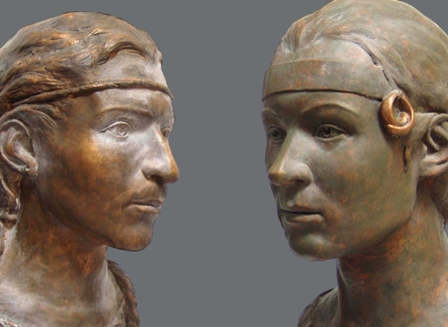
The period during which Arkaim existed is associated with the establishment of complex producing economy in the Steppe. The population of Arkaim was engaged primarily in cattle breeding, with agriculture (barley, millet) present in small volumes, and a high degree of development of metallurgy and other crafts. The ritualistic sphere of existence and, probably, mythology were developed. The environments in which rituals took place and reconstructions of general ethnocultural processes indicate that the population of Arkaim belonged to the cultures of the Indo-European circle. A non-literate culture was practiced, with oral and iconographic (in the form of ornaments and symbolograms) transmission of information.